
Turn Your People Into a Human Firewall
PhishGuard runs realistic phishing simulations and auto-assigns awareness training — so every risky click becomes a teachable moment, not a breach.
Phishing & Training, Together
Standalone phishing tools train no one; standalone training catches nothing. PhishGuard closes the loop — failures become enrollments, automatically.
Phishing Simulations
Launch realistic credential, attachment and link lures against any group — or your whole employee directory.
Inbound Email Security Coming soon
Catches business-email-compromise and phishing that reaches the inbox — approval-gated quarantine, time-of-click URL protection, and multi-channel (incl. voice) simulation.
Lure Builder
Generate convincing, on-brand phishing templates in seconds, or pick from a ready library.
Awareness Training
A library of micro-courses — 3-minute modules plus quizzes — on phishing, passwords, data protection and more.
Auto-Enroll on Click
Anyone who clicks a simulation is automatically enrolled in remedial training — the teachable moment, captured.
Tracking & Certificates
Track opens, clicks and reports per recipient, and issue downloadable PDF certificates automatically when learners pass.
Reports & Risk Scoring
Board-ready reports and human-risk score bands: click rates, repeat offenders, department risk and training completion at a glance.
See Who Clicks — Before Attackers Do
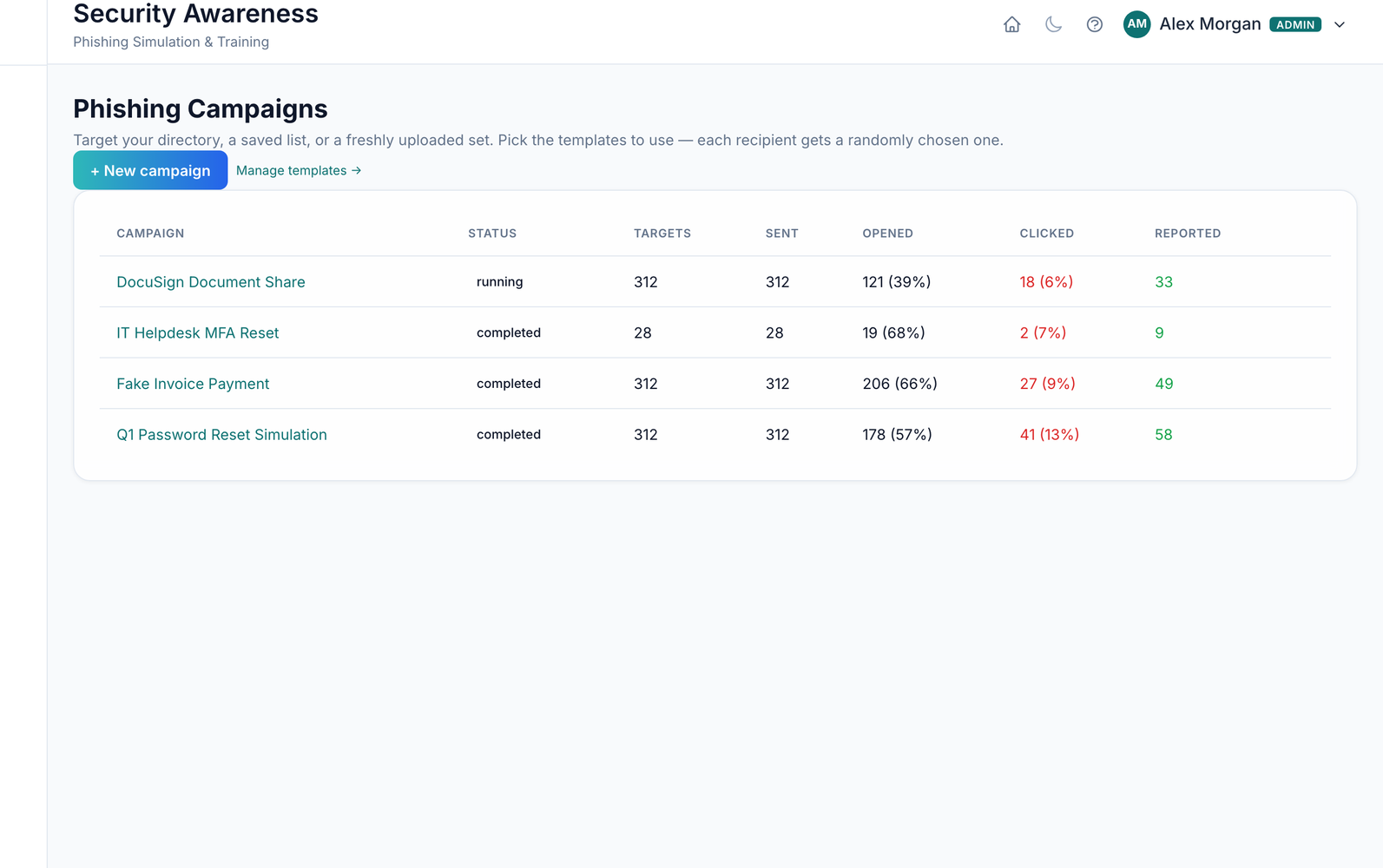
Spin up a campaign in minutes: choose a lure, target a saved list or your directory, and send. Every open, click and report is tracked per recipient so you can spot repeat offenders and high-risk departments instantly.
- Credential, attachment and link-based lures
- Per-recipient open / click / report tracking
- One-click reporting button for employees
- Repeat-clicker and department risk scoring
Every Click Becomes a Lesson
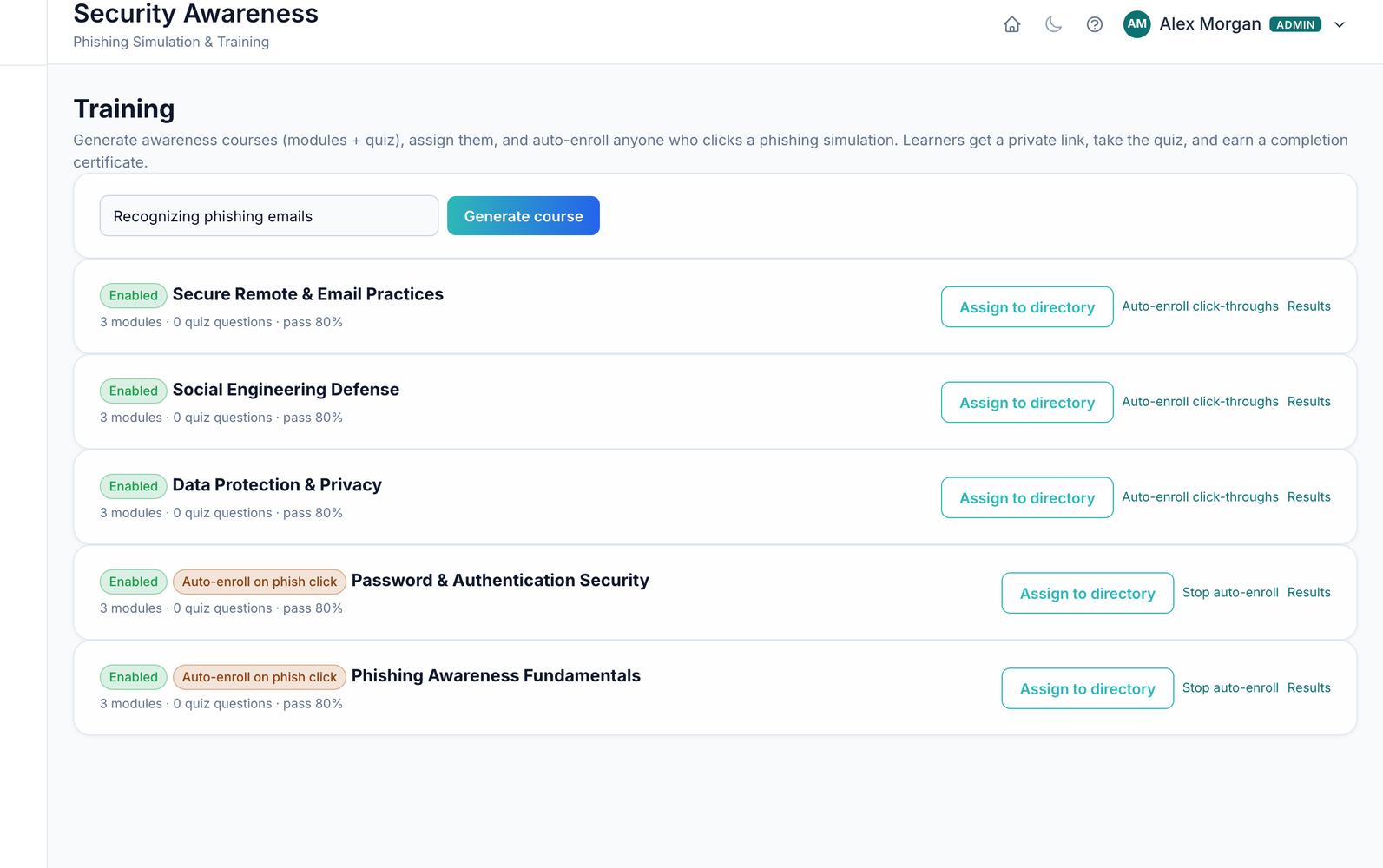
Assign micro-courses to your whole directory, or let PhishGuard auto-enroll anyone who clicks a simulation. Learners get a private link, take a short quiz, and earn a completion certificate — no LMS required.
- Auto-generated or library courses (3-min modules)
- Auto-enroll click-throughs into remedial training
- Quizzes with pass scores + automatic certificates
- GDPR, HIPAA, social-engineering & password topics
Inbound Email Security & BEC Defense
Stop the phish that makes it to the inbox. PhishGuard inspects real inbound mail for business-email-compromise and credential-phishing, protects every link at the moment of click, and lets you pull a malicious message back — with approval.
More Coming Soon
Built and in final testing — rolling out across the platform soon.
Autopilot Phishing Programs
Set-and-forget recurring campaigns that drip lures across your directory on a schedule.
Credential-Capture Simulation
Realistic fake-login pages measure who submits credentials — passwords are never stored.
Live Directory Sync
Keep your people list current automatically from M365/Google/SCIM.
Compliance-Mapped Training
Training completions map to SOC 2/HIPAA controls and flow to ClearTrust as evidence.
Ready to Build a Human Firewall?
Start a free PhishGuard trial and run your first phishing simulation in minutes — or book a demo with our team.